
Skill to heal with the spirit to care.

What's new

Latest news

Cardio-DNB-Slider-Trust-Hospitals-V1

Cardio-DNB-Slider-Trust-Hospitals-V1

DNB (Super Specialty) – Cardiology

Admissions Open | June 2025 Session

Trust Multispeciality Hospitals, Kakinada – NABH Accredited

Step into a high-volume, high-learning cardiac centre and shape your future as a DNB Cardiology trainee.

Department Overview

Our dynamic Cardiology programme is supported by a vibrant team consisting of:

* Two experienced Interventional Cardiologists
* Electrophysiology services
* Paediatric Cardiology services
* Full-fledged CTVS team (Heart-team approach)

We provide comprehensive cardiac care including emergency cardiology, advanced interventional procedures, and non-invasive cardiology under one roof.

Academic & Clinical Excellence

Train in a modern cardiac unit equipped with:

✔️ State-of-the-art Cath Lab
✔️ TTE/TEE for comprehensive cardiac imaging
✔️ IVUS & FFR for advanced coronary assessment
✔️ Strong ICU backup for critically ill interventions
✔️ Broad case-mix including structural heart and EP procedures

The program ensures:

* Hands-on procedural exposure from Day 1
* Regular academics – journal clubs, case discussions, cath meets
* Extensive opportunities for assisting & independently performing procedures
* Collaboration with CTVS & ICU for multidisciplinary learning

Ideal for motivated postgraduates aiming to build strong clinical skills and interventional confidence.

Core Faculty – Cardiology

Dr. P. V. Nishanth
MD (Gen. Med), DNB (Cardiology) – NIMS
Consultant Interventional Cardiologist
+91 98491 35721

Dr. B. D. Pavan Kumar
MD, DM (Cardiology)
Consultant Interventional Cardiologist
+91 93999 92787

Best-in-city cardiology care with dedicated paediatric and EP cardiology services, rapid door-to-needle (20–30 min) and door-to-balloon times (<90 min) in acute MI.

Key Procedures

* Coronary Angiography
* Coronary Artery Stenting
* EP mapping & Ablation
* Pacemaker & ICD implantation
* Structural heart interventions (as per case mix)

Eligibility

MD / DNB in General Medicine (from MCI/NMC-recognized institution)
Full-time, 3-year residential programme

For Applications & Enquiries
Apply with CV & contact details
Mention: “DNB Cardiology Application”

+91 98491 35721 (Dr PV Nishanth)
+91 93999 92787 (Dr Pavan Kumar)

Trust Multispeciality Hospitals, Sarpavaram Junction, Kakinada

Train at a centre where every heartbeat matters
Trust Multispeciality Hospitals — Absolute Cardiac Excellence
DNB-Slider-Trust-Hospitals-V1

DNB-Slider-Trust-Hospitals-V1

TRUST Multispeciality Hospitals Kakinada, AP,is pleased to announce the commencement of a prestigious DNB (Diplomate of National Board) Super Speciality Program in Nephrology starting from the academic session June 2025.

Program Highlights:

  • Seats Available: 2 (exclusive to qualified candidates)
  • Duration: 3 years (full-time, residential)
  • Eligibility: MD/DNB in Medicine/ Pediatrics from an MCI/NMC-recognized institution.

We have a large Hemodialysis unit of 25 dedicated machines.
We have Prismaflex for CRRT for our ICU patients
We run an active CAPD / APD program
We have dedicated vascular access team for AVF creation and salvage, TCC and temporary access.
All interventions in Nephrology including real time kidney biospies, Renal artery stenting
We have an active renal transplant programme including Live donor, deceased donor, ABOi and Sensitized Kidney transplants and management of complications.
We have a large OPD and cater to all patients with Kidney diseases.
Dedicated full time 3 consultants in Nephrology.
Senior consultant and Head of department- Dr. D.V.S. Somayajulu DM in nephrology from prestigious SGPGI-MS Lucknow with 20 years post DM experience in Nephrology.
Senior consultant Dr. Sana Praveen CCT in Nephrology from UK with more than 10 years of experience in Nephrology.
Dr. B.V.R.H. Sastry, DM in Nephrology from prestigious MMC Chennai with more than 4 years post DM experience in Nephrology.

We request if anyone is interested to pursue the course or for any enquiry regarding the course, to please contact at any of the following Numbers.

9704652406
8500104488
7022847543

Case Oct 2023 Trust

Case Oct 2023 Trust
 
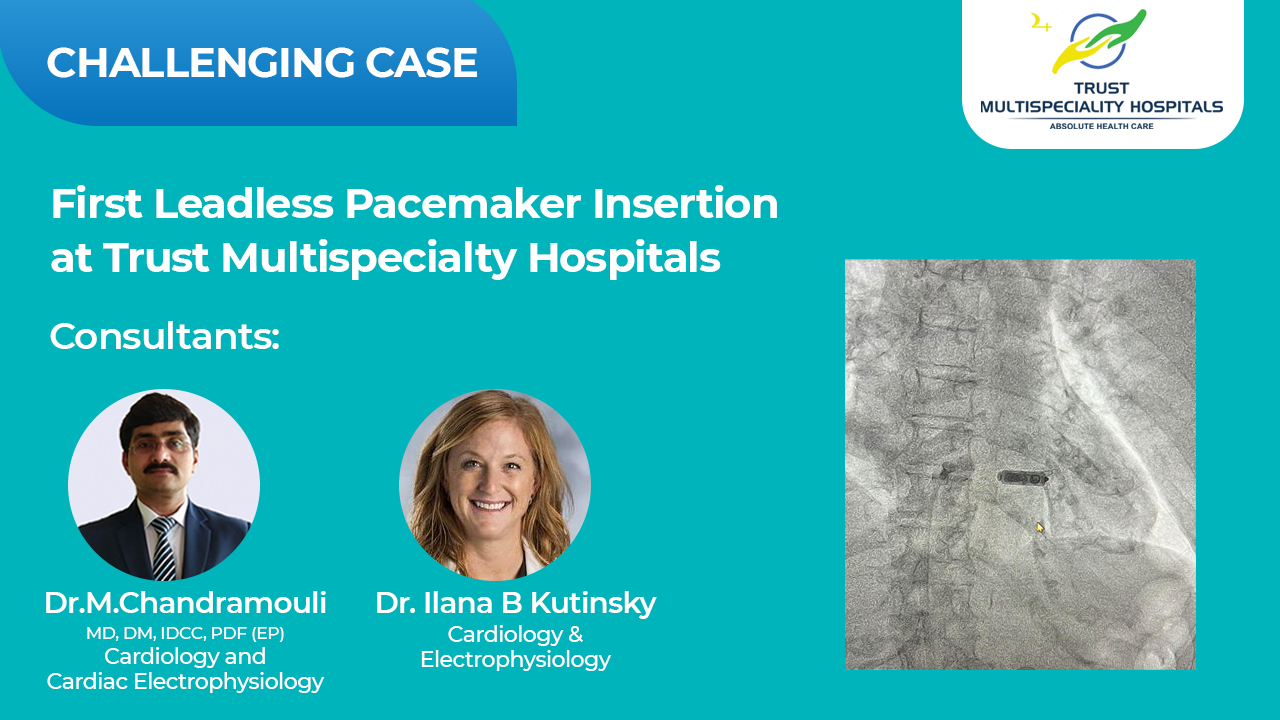
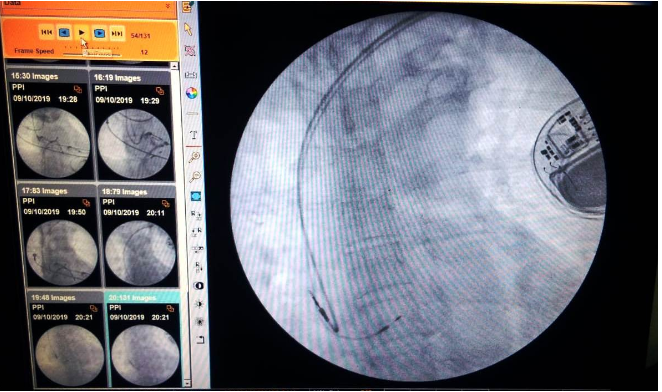
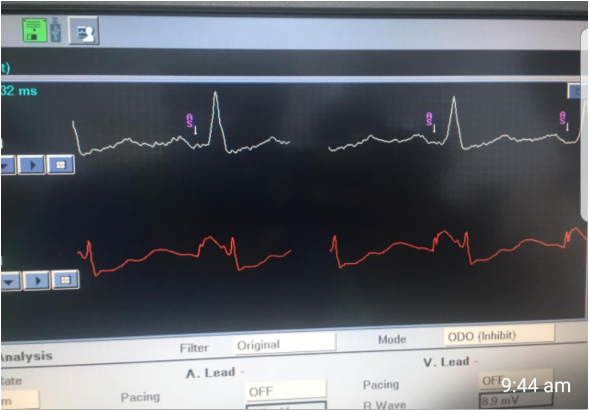
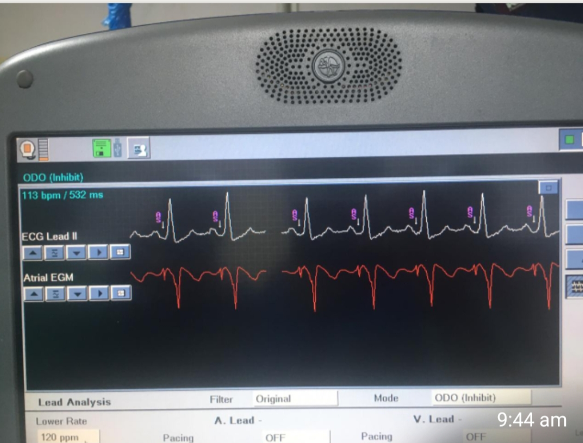
We are thrilled to announce that Trust Multi Specialty Hospitals has successfully completed its first leadless pacemaker insertion. This cutting-edge procedure was expertly executed by Dr. Ilana B. Kutinsky, Cardiac Electrophysiologist, Dr. Chandra Mouli, and our esteemed Cath Lab team.
 
A leadless pacemaker is an innovative one-piece device that is implanted into the heart via a vein. It eliminates the need for a separate battery under the skin or leads to the heart, marking a significant advancement in patient comfort and safety. Signals from this device ensure the heart continues beating normally, enhancing the quality of life for patients with cardiac rhythm disorders.
 
We are immensely proud of this achievement and the strides Trust Multi speciality Hospitals is making in providing state-of-the-art medical services. We remain committed to incorporating the latest advancements in medical technology to offer superior care to our patients.

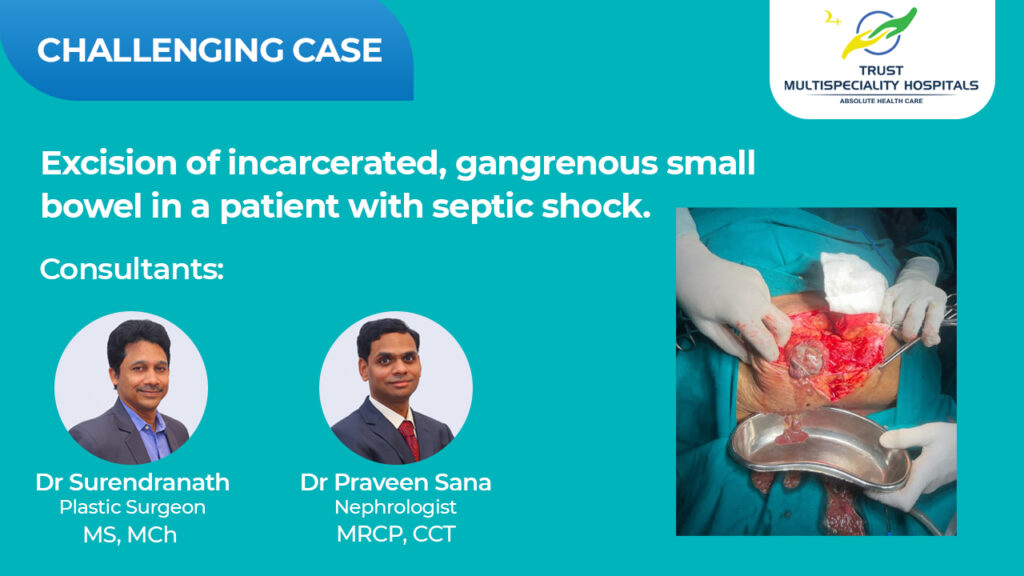
A 49 yr old lady presented to the hospital with a 4 day history of abdominal pain. She was a patient with a high BMI of about 35, known to have Diabetes and hypertension. She was diagnosed to have an incarcerated incisional hernia. Echo at the time of admission showed hypokinesia of the inferior wall. She had a fair LV function with an EF of 58%.

She underwent an emergency laparotomy and incarcerated*, gangrenous**  small bowel was found in an incisional hernia. Gangrenous bowel was excised and end to end anastomosis was done by the surgical team. She developed septic shock post op and required high ionotropic support. She developed oliguric AKI with metabolic acidosis. In view of circulatory shock, she was provided CRRT*** support in ICU for 36 hrs by the Nephrology and intensive care teams. She made a good recovery and renal function normalized. She was discharged in a stable condition. 

*Incarcerated hernia is when a part of the bowel protrudes out of the abdomen and cannot be pushed inside.

**gangrene is the death of a body tissue due to lack of Oxygen suppy

*** CRRT is a 24 hour non-stop dialysis done in patients who are extremely unwell and have kidney failure.

Case of the Thumbnail

Case of the Thumbnail

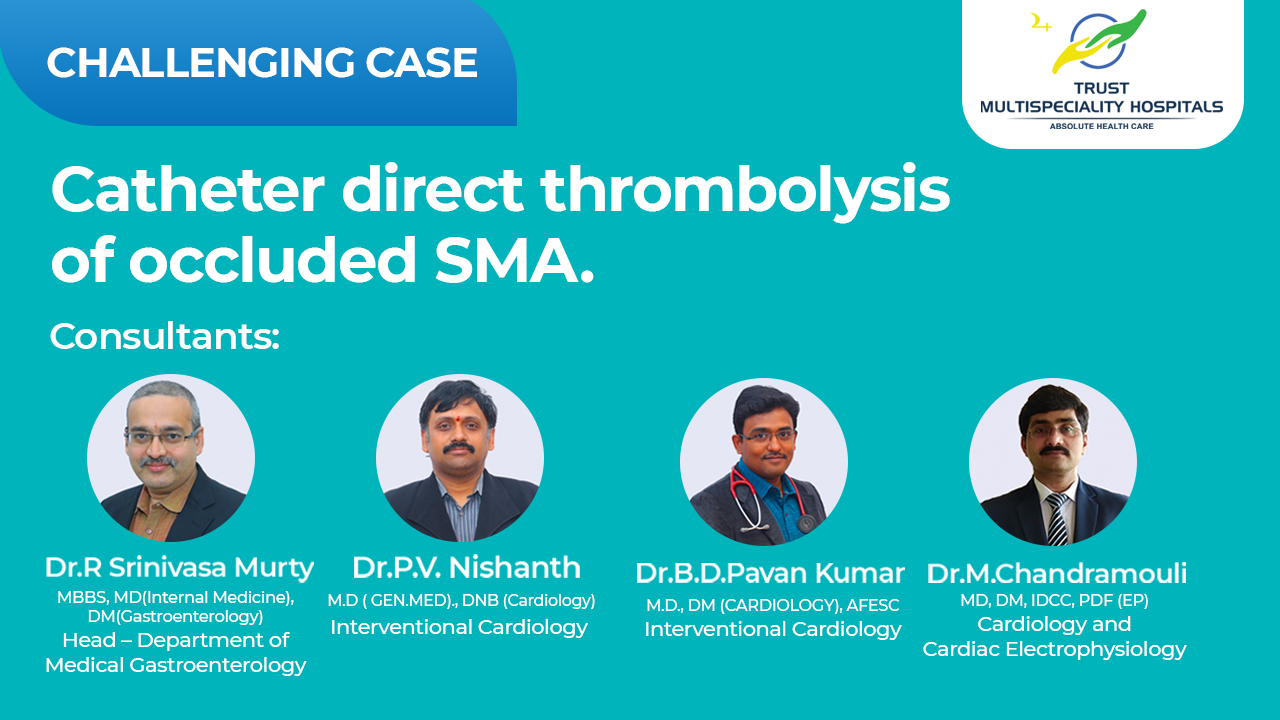
A 45 yr old male patient was diagnosed with peripheral vascular disease in 2017 when he had presented with claudication pain in the left lower limb. He was a chronic smoker. CT angio at that time revealed diffuse atherosclerotic disease with significant narrowing and non opacifation of right internal iliac, bilateral femoral, popliteal and tibial arteries. He was treated with Aspirin, Clopidogrel, Heparin, Cilostazol and Pentoxifylline. He was later given 6 cycles of PGE-1 therapy with which he had partial improvement. Since late 2019, he was poorly compliant to medication with irregular follow up with recurrence of claudication pain.

He presented now with a one week history of left sided abdominal pain, predominantly after food intake associated with black stools. A possibility of mesenteric ischemia was considered and USG abdomen with Doppler revealed thickened jejunal folds with SMA thrombosis. CT angiogram also revealed SMA thrombosis with circumferential thickening of jejunum with associated fat stranding. He was anticoagulated with UFH while monitoring APTT and was later changed to LMWH. He was monitored for any evidence of bowel gangrene. He continued to have pain abdomen following food intake. Doppler after 5days and 10 days of heparin therapy revealed non clearance of thrombus with no blood flow. Then we took the help of our esteemed and very experienced cardiology colleagues.

Patient was taken up for SMA intervention. Occlusion of SMA was confirmed via angiography (1). SMA was crossed with a pilot wire and dilated with 4 mm balloon. Flow not established despite dilatation. In view of persistent thrombosis, reperfusion Catheter was placed in SMA and Streptokinase was infused over 48 hrs at 1ml / hr resulting in good reperfusion (2).

what anesthesiologist do

An anesthesiologist will meet with you before your surgery and ask you questions to assess your risk and suitability to give anaesthesia. These include questions such as:

    • Do you have any health problems?
    • Do you have any dental problems, such as loose teeth or false teeth?
    • What medicines do you take, including over-the-counter medicines and supplements?
    • Do you smoke, drink alcohol, or use any illegal drugs?
    • Do you have any allergies to foods or medicines
    • Have you or any of your relatives ever had a problem with anesthesia medicines?

In some cases, you might have a choice between different types of anesthesia.
Your anesthesiologist will also tell you how your anesthesia will be given and answer any questions you have. They will continually check your breathing, blood \ pressure, and heart rate during the procedure. If you have general anesthesia, your anesthesiologist also makes sure you stay unconscious.

Can I wake up during general anesthesia?

It is very rare to wake up during general anesthesia (less than 1 patient in every 15,000
operations). Your anesthesiologist constantly adjusts the medicines to keep you from waking up.

Are there any side effects from anesthesia?

Each type of anesthesia has possible side effects.
If you have a spinal block or epidural, the numbness will last for a few hours after your
procedure before wearing off. Other side effects can include:

  • Headache – There is a small chance of getting a type of headache that can last for several days. This is sometimes called a “spinal headache.” It usually goes away on its own, but pain-relieving medicines and other treatments can help.
  • Trouble urinating – Some patients have trouble emptying their bladders for a few hours after surgery until the anesthetic wears off.

 If you have general anesthesia, you will likely feel a little groggy or confused for a short time after waking up. Other side effects can include:

 
  • Feeling sick to your stomach (nausea) and throwing up (vomiting) – Your anesthesiologist can give you medicines for this problem.
  • A sore throat – This can happen if you had a breathing tube. It usually gets better quickly.

what is anesthesia

“Anesthesia” is a medical term for different types of medicine people get before and during surgery or procedure. These medicines are given to make sure you do not feel pain during the procedure. In some cases, like when you are “put to sleep” for surgery, the anesthesia medicines also prevent you from remembering it afterwards.
Anesthesia medicines are given by a doctor called an “anesthesiologist.” Sometimes a “nurse anesthetist” is involved, too. These are nurses with special training in anesthesia.
  1. Local

    This type of anesthesia uses medicine to numb a small part of your body so you don’t feel pain. It can be given as a cream, gel, or spray on the skin. It can also be given by an injection (shot) into the skin. You might be awake when you get local anesthesia.

  2. Regional

    This type of anesthesia blocks pain in one area of your body, such as an arm, leg, or the
    lower half of your body. If you get regional anesthesia, you might be awake. Or you might get medicines to make you relax and feel sleepy, called “sedatives.” Sedatives are given through a thin tube that goes into a vein, called an “IV.

    One type of regional anesthesia is called a “spinal block.” The anesthesiologist puts a small needle in your lower back, and injects medicine to numb the nerves in your spine. It can be used for surgery done on your legs or inside your belly. Another type is an “epidural.” The anesthesiologist uses a needle to put a small tube (called a “catheter”) into your lower back, near the nerves in your spine. Some women get an epidural during childbirth. Other people get one for a surgical procedure or to control pain after surgery.

  3. General

    This type of anesthesia makes you unconscious so you can’t feel, see, or hear anything during surgery. Some of the medicines are given through an IV. Others are gases that you breathe. You might also get a breathing tube to help you breathe. If this happens, the anesthesiologist will carefully place the tube in your throat while you are asleep during general anesthesia, and remove it before you wake up.

pacemaker implantation-1

In Cardiology Department the first case of successful ‘His bundle’ pacing with permanent pacemaker implantation in Andhra Pradesh by Dr. Chandra Mouli DM cardiologist & EP specialist & Dept of Cardiology. 60 yr old patient who resented with an idio junctional rythm and syncope. Pre-procedure QRS duration was 110 m sec which came down to 92 m sec post pacemaker implantation.

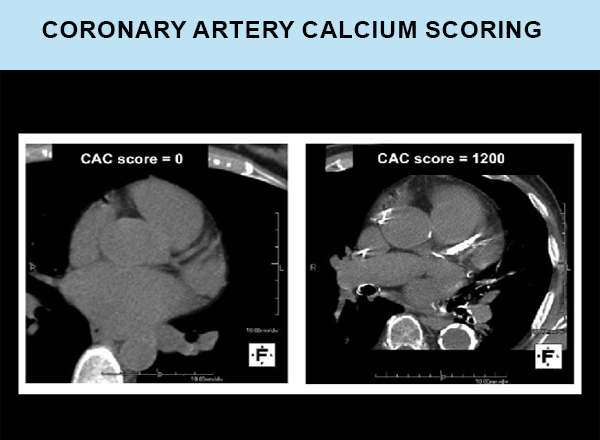
Coronary Artery Calcium Scoring

The coronary arteries are the vessels that supply blood to the heart. Plaque or calcium build-up in the coronary arteries causes heart disease or can lead to a heart attack. A test called Coronary artery calcium (CAC) scoring can detect this build up and is a good predictor of coronary events. This test has been demonstrated to be a better predictor than cholesterol levels in medical studies.

This is done using special X Ray equipment called a CT scanner which takes pictures of the blood vessels supplying the heart. The entire procedure is usually completed with in about 10 Minutes.

How is a CAC score calculated?

A calcium score (sometimes called an Agatston score) is calculated based on the amount of plaque observed in the CT scan.

What is the significance of the CAC score?

Based on your score, your doctor will be able to do risk stratification and suggest preventive strategies or further evaluation.

  • Zero: No plaque. Your risk of heart attack is low.
  • 1 – 10: Small amount of plaque. You have less than a 10 percent chance of having heart disease, and your risk of heart attack is low.
  • 11-100: Some plaque. You have mild heart disease and a moderate chance of heart attack. Your doctor may recommend other treatment in addition to lifestyle changes.
  • 101 – 400: Moderate amount of plaque.  Your chance of having a heart attack is moderate to high.
  • Over 400: Large amount of plaque. This signifies that there is extensive deposition of calcium in the arteries. Your chance of heart attack is high and aggressive prevention strategies are to be used.

Book your appointment

Consult our internationally qualified doctors.